
Leave a Comment / Uncategorized / By raktimdhar6
The image that comes to our mind when we think of the Roman Empire is usually about soldiers marching in armour, huge stone buildings, gladiators battling in the Colosseum, or powerful emperors occupying golden thrones. but, the true story of Rome is much greater than these well-known pictures.
The Roman Empire was a vast Empire which lasted for centuries. It had been established by means of war and conquest, yet it also achieved many things in the fields of engineering, law, architecture, government, literature, and culture. Nowadays, more than a thousand years since the Roman Empire ceased to exist in the West, its influence is still visible in many aspects of our lives.
Then how did a small city manage to become one of the greatest powers in the ancient world?
From a Small City to a Powerful Republic
Rome was originally a settlement on the Italian Peninsula; according to Roman tradition the city was founded in 753 BCE, although the real development of Rome was a more gradual process.
For many centuries Rome was a republic and not an empire; political power was held by elected officials, the Senate, and various other institutions, and during that time Rome gradually extended its territory.
The Romans achieved great success in war since they defeated the neighbouring peoples, took over most of Italy and eventually became engaged in conflicts that lay beyond the Italian Peninsula.
One of the most important rivals that Rome faced was Carthage, a strong city in North Africa. The two states fought three major wars which were called the Punic Wars. In the end Rome brought about the destruction of Carthage and thus became the leading power in the western Mediterranean.
Yet success led to new difficulties since Rome had become too powerful and too wealthy for its previous political system to deal with easily.
The End of the Republic
When Rome grew in size, influential generals acquired huge power, one of the most well-known being Julius Caesar.
Caesar became a successful military leader and in the end came to have control of Rome. Many of the members of the political elite were frightened by his increasing power. In 44 BCE some senators took part in his assassination.
They hoped that the fact of his death would bring about the restoration of the old Republic.
Rather, it resulted in a further phase of civil war.
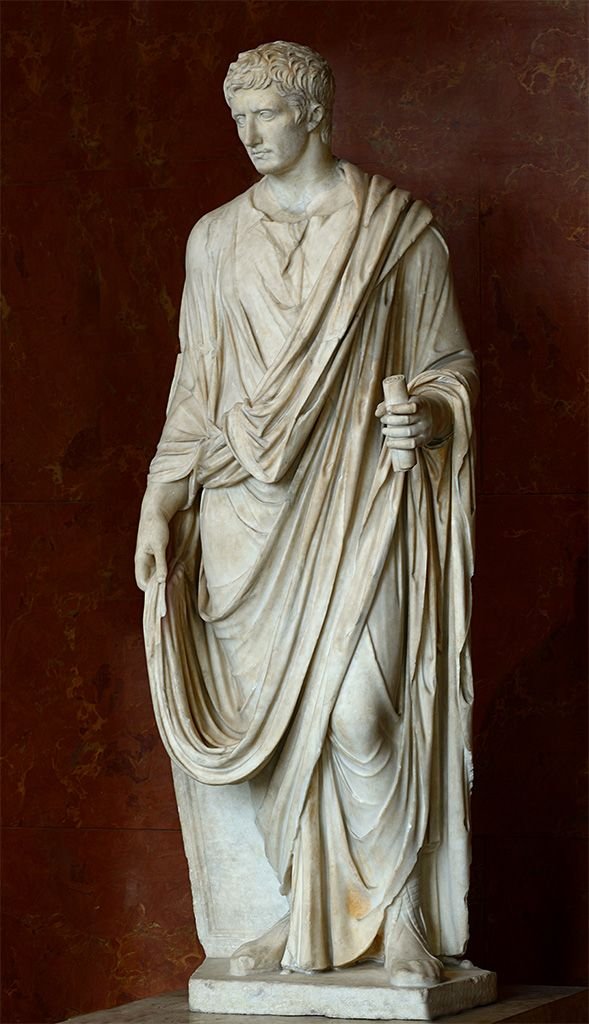
In the end, Octavian, who had been adopted as Caesar’s heir, overcame his last opponents. In 27 BCE he was given the name Augustus. This made him the first emperor of Rome and signalled the traditional start of the Roman Empire.
Interestingly, Augustus did not merely declare the Republic to be at an end since although Roman political customs carried on, actual power became increasingly concentrated in the hands of the emperor.
Life Inside the Roman Empire
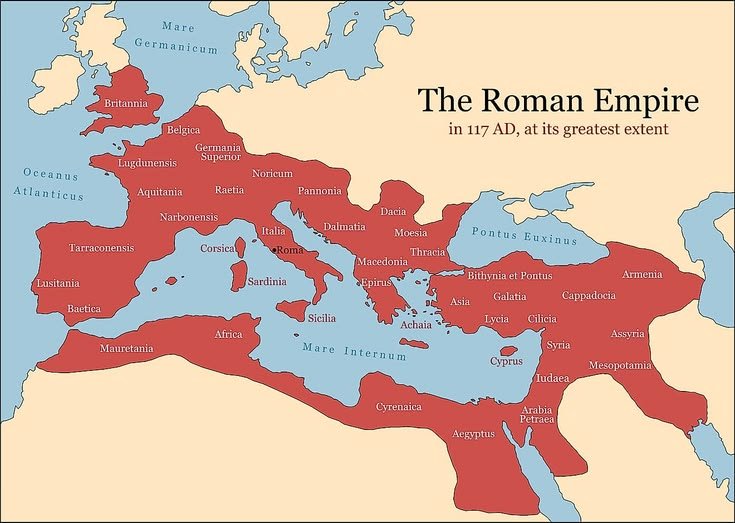
At its greatest extent the Roman Empire spanned a vast area and it had territories in Europe, in North Africa and in the Middle East.
An empire involves more than just the borders shown on a map since millions of ordinary people lived within those borders.
The population included farmers, merchants, craftsmen, soldiers, politicians, slaves, teachers, sailors, and a great many other people. They spoke various languages and adhered to different religions.
People’s lives could also be very different according to their social status; a rich Roman could live in a comfortable house, have elaborate meals and employ servants, while the poor usually had to live in crowded apartment blocks.
Cities were key centres in Roman life and had within them markets, temples, baths, theaters, government buildings, and places for public entertainment.
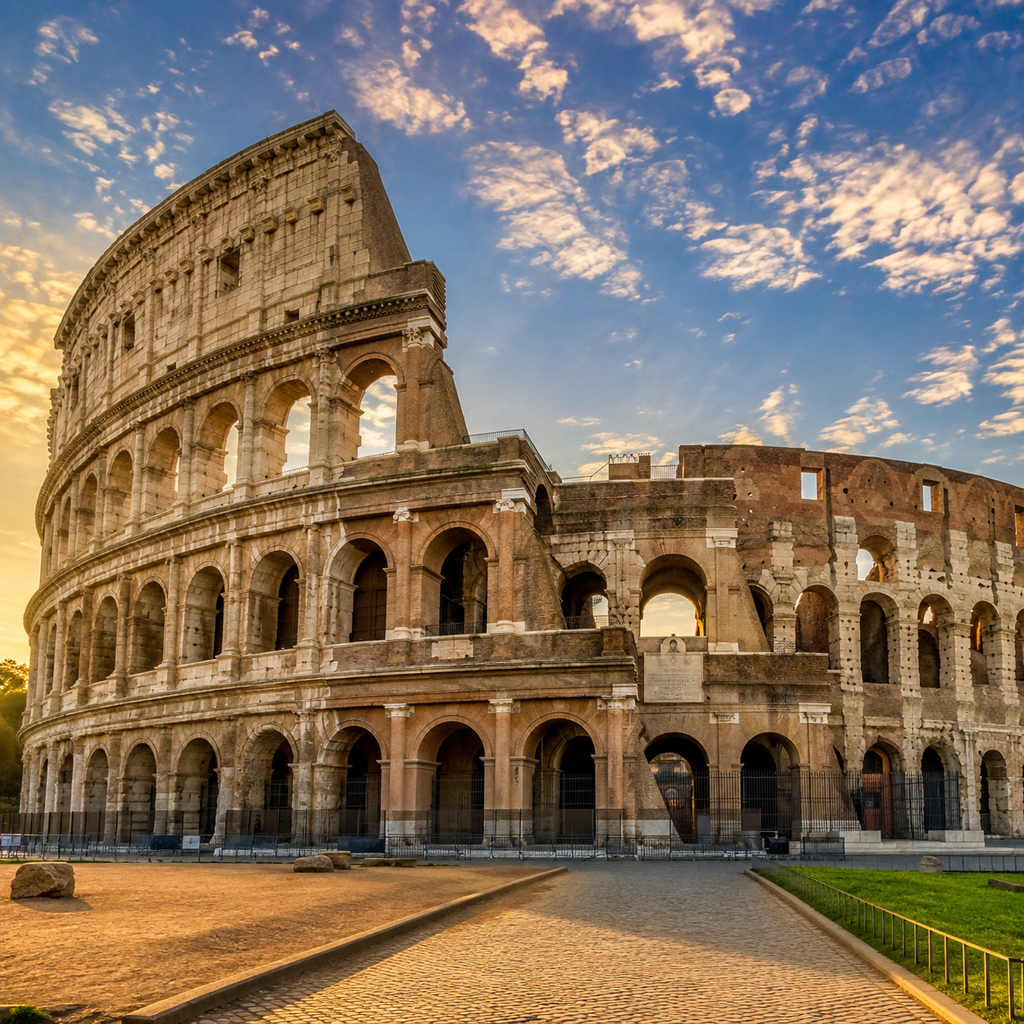
The Colosseum is an outstanding example of Roman public culture since large numbers of people used to gather at the site to watch spectacles and games. Although these events were intended as entertainment, they also served to show off the wealth and power of the Roman state.
The Roman Army
The existence of the Roman Empire was dependent on its army.
The Roman soldiers were well organised and well trained. They defended the borders of the empire, conquered new lands, and at times took part in political disputes.
Military success on the part of the Romans was not merely due to the bravery of their soldiers; organisation, discipline, logistics, the road system, fortifications, and leadership were all important.
The army also played a role in linking together the empire by travelling throughout the various provinces and constructing roads, bridges, camps, and defensive works.
Rome’s Incredible Engineering
What still amazes people regarding Rome is its engineering.
The Romans built road networks extending over thousands of kilometres, some of which linked distant areas of the empire and stayed in use for centuries.
The Romans also constructed aqueducts in order to bring water into cities, and the public water supply was used for fountains, baths, households, and all other urban requirements.
There was also Roman concrete and architecture, with enormous buildings, arches, domes, bridges, and amphitheaters showing off a remarkable knowledge of construction.
So that many Roman buildings have survived in some shape or form it is due to the high standard and large scale of their construction.
Religion and Christianity
Religion was closely linked with Roman society, and the traditional religion of the Romans included many gods such as Jupiter, Mars, Venus, and Minerva.
The religious aspect of the empire, however, was varied since different groups brought their own beliefs and customs into the area under Roman control.
In the first century CE Christianity started to spread throughout the Roman world.
Christians were at different times persecuted, even though persecution was not continuous throughout the empire.
A significant turning point occurred under Constantine the Great in the fourth century, since he backed Christianity and as a result the religion became ever more important in the Roman Empire.
It represented one of the great changes in Roman history.
Why Did the Empire Fall?
The idea of the “fall of Rome” often leads people to think that it was the result of a single huge battle which at once ruined the empire.
The situation was a great deal more complicated.
The Western Roman Empire suffered from political instability, civil wars, economic problems, military pressures, and disputes with various groups which were entering or settling in Roman territory.
The empire was just as huge, which made it hard to administer and defend properly.
In 476 CE Romulus Augustulus was deposed from office and historians have generally taken that event as marking the date of the fall of the Western Roman Empire.
However, Rome never entirely vanished.
The Eastern Roman Empire lasted for many centuries and had its capital at Constantinople; what historians usually refer to as the Byzantine Empire went on until 1453.
Rome’s Lasting Legacy
One of the most interesting aspects of Rome is that its influence continued even after the Western Empire had fallen.
Later legal systems were influenced by Roman law. Many modern European languages have been affected by Latin. The architectural ideas of the Romans inspired subsequent builders. Roman political ideas had an impact on governments and on political thinkers.
Even nowadays, words, place names, roads, buildings, and institutions can in some cases be traced to Roman traditions.
that’s why Roman history is so important and interesting.
Final Thoughts
The Roman Empire consisted of much more than just emperors, battles, and ancient ruins; it was a large civilization which linked millions of people throughout three continents.
We are still able to see the influence of Rome today because its story continues to amaze us.
The true legacy of the Roman Empire was not merely that Rome had at one time controlled a large part of the ancient world, but that its ideas and achievements went on to influence the world long after the Roman emperors were no longer in power.