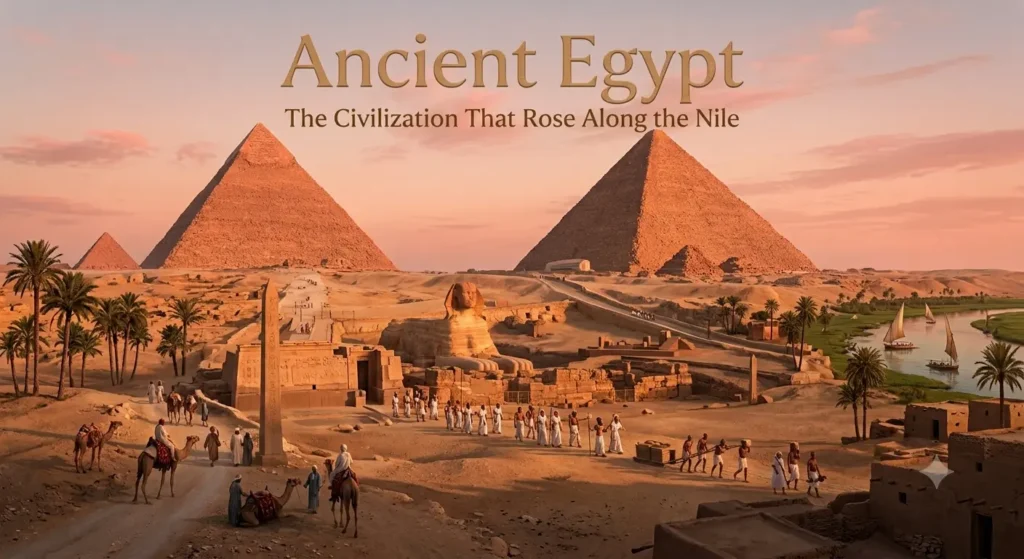
When thinking of Ancient Egypt, the word ‘monuments’ is among the first that come to mind. From gigantic pyramids to mysterious pharaohs, from golden treasures to the Great Sphinx, there is no doubt Ancient Egypt was much greater than some of its famous posteroity.
For thousands of years, people lived in lands alongside the Nile River constructing one of humanity’s most prominent civilizations. The Ancient Egyptians developed their writing system and impressive architecture, traded products with other countries, and discovered unique concepts relating to medicine, religion, or even mathematics.
Nevertheless, what made Ancient Egypt so special that it mesmerizes millions around the world even today? Let’s dig deeper into history and learn more about this ancient, intriguing, and unforgettable civilization.
The Nile: The Heart of Egypt
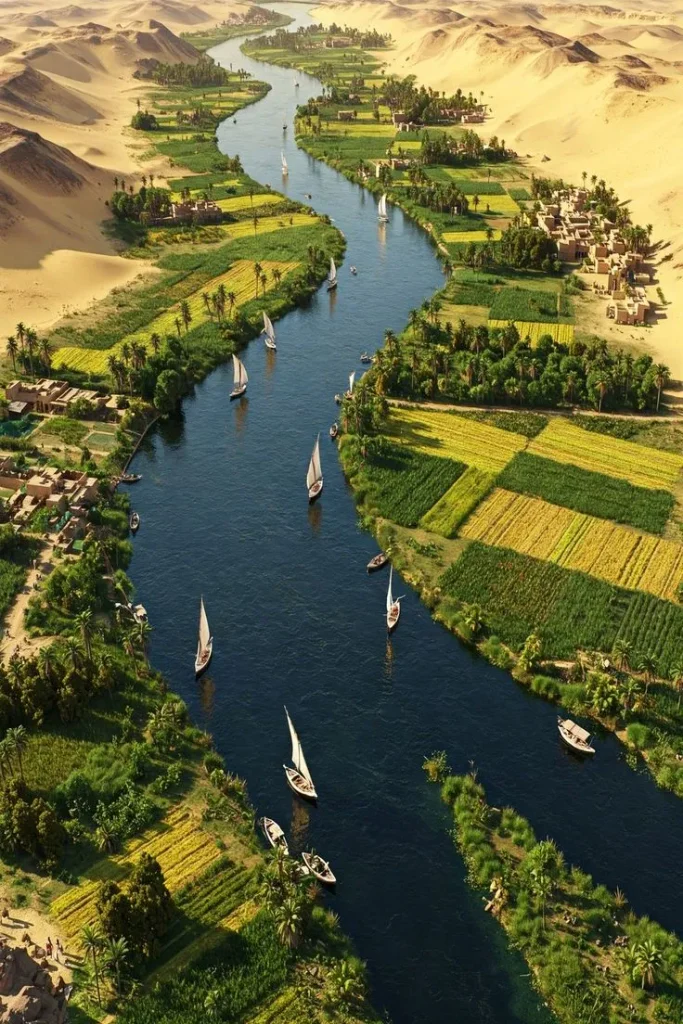
The chronicles of Egypt’s history began along the banks of the world’s longest river — the Nile.
Flowing through northeastern Africa, the Nile played an essential role in feeding ancient Egypt. While the territory was largely a desert several thousand years ago, the land alongside the river was exceptionally fertile. Every year, the Nile overflowed its banks, enriching the soil with invaluable nutrients. Hence the egyptians were able to yield an enormous amount of food, including wheat and barley.
Moreover, the river provided the egyptians with fertile earth, fish, good means of transportation, and water. That is why the ancient Greek historian Herodotus used to say that Egypt is the gift of the Nile. Truly, without the fertility of the Nile’s banks, Egypt would not have developed as it did.
The Rise of the Pharaohs
Ancient Egyptian civilization developed for thousands of years, encompassing dozens of dynasties. Around 3100 BCE, the first historically known pharaoh, Narmer, united both Upper and Lower Egypt on the banks of the Nile River. The earliest period of Egyptian history is called the Early Dynastic Era.
In Ancient Egypt, the pharaoh used to play a vital role in both religious and political affairs of the country. The ancient egyptians believed the pharaoh was the physical representation of their gods on Earth. His most important duty used to be the maintenance of order within the country.
Hundreds and thousands of different Pharaohs ruled Ancient Egypt throughout its long history. Many of them are remembered for either magnificent building projects or rare tomb finds.
The Pyramids: More Than Just Monuments
Few structures in the world were as recognizable and awe-inspiring as Egypt’s pyramids.
The most renowned of them are located in Giza near modern-day Cairo. The pyramid of Pharaoh Khufu (or Cheops) is the biggest among them — the Great Pyramid was built in the period of the Fourth Dynasty (around 2600 BCE). The construction of such buildings would have been impossible without the hard work of thousands of Egyptian workers. The sheer volume of effort required to transport, lift, and place giant stone blocks on to the top of the pyramids is mind-boggling. Mainly built as tombs for Ancient Egyptian Pharaohs, the pyramids used to symbolize Ancient Egypt. According to the Ancient Egyptians, death did not equal the end of life.
Instead, egyptians used to prepare for the afterlife. Hence all the gold and treasure found in the tombs of the pharaohs were intended for them in the next life. The Great Pyramid of Giza used to be the tallest man-made structure on the planet for centuries.
The Great Sphinx
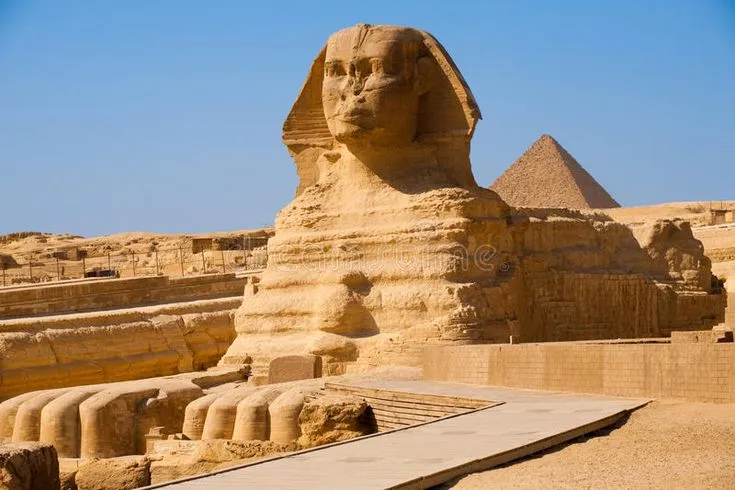
A few hundred yards away from the Pyramids of Giza, there is another monumental structure called the Great Sphinx. The Great Sphinx is a colossal statue of a lion-like beast with a human head. The Great Sphinx of Giza is commonly attributed to King Khafre (the fourth pharaoh of the Second dynasty). The Great Sphinx guarded the pyramids of Ancient Egypt for thousands of years.
Despite being one of the most recognizable landmarks of Ancient Egypt, the Sphinx had weathered significantly over time. Nevertheless, it remains a vivid symbol of Ancient Egypt even today.
Egyptian Religion, Gods, and Afterlife
Ancient Egypt’s culture was inextricably linked with its religion. The Egyptians worshipped mythological gods and goddesses such as Ra, the sun god, Osiris, god of the underworld, Isis, a goddess associated with motherhood, and Horus, the sky god depicted as a falcon-headed.
Ancient Egyptians believed in the afterlife, reincarnation, and divine judgment. It was the belief, deeply rooted in every Egyptian’s soul, that shaped their understanding of the world. According to the ancient Egyptians’ beliefs, a person’s heart needed to be heavier than Ma’at’s feather to enter the next life. Ma’at was the goddess of truth, justice, and order.
Their religious practices also involved mummification and complicated burial procedures. Mummies were frequently discovered in ancient Egyptian tombs. The process of mummification lasted around 70 days. Inside the abdominal cavity, the deceased person’s brain and organs were extracted and carefully placed in linen sacks.
Many of Ancient Egypt’s cultural practices and traditions were dictated by the Egyptians’ beliefs regarding the afterworld.
Mummies and Burial Practices
Ancient Egypt is known for its distinctive cultural practices. One of the most astonishing of these cultural practices was mummification. The Egyptians believed human bodies needed to be prepared to continue living in the afterworld. Mummification was a complex procedure in which the body of the deceased was dried and wrapped in linen. The Egyptians believed human bodies needed to be prepared to continue living in the afterworld.
Mummification was a complex procedure in which the body of the deceased was dried and wrapped in linen. Inside the abdominal cavity, brains and organs were sometimes removed and placed in bags. Bodies were then placed in coffins for burial.
Although the rich and famous had the resources to prepare elaborate burials, many people were not fortunate enough to do so. The elaborate burials and valuable treasures that often accompanied them were mostly attributed to wealthy and influential members of Egyptian society. Inside tombs were often found food, wine, valuable items, furniture, and even jewelry, which Ancient Egyptians believed were necessary for the afterlife.
Hieroglyphs: The Unique Writing System of the Ancient Egyptians
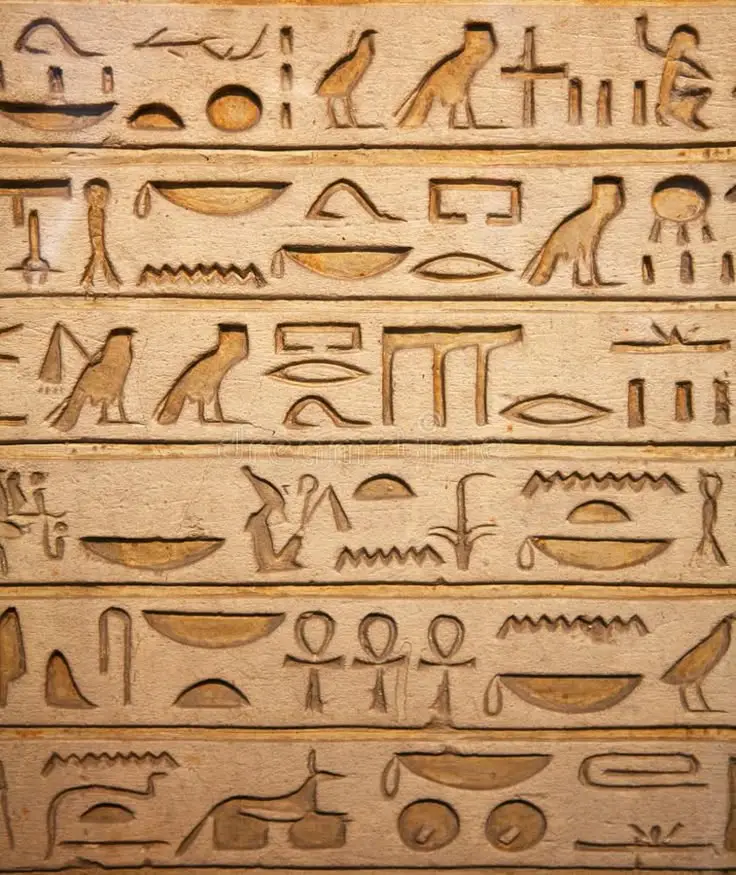
Ancient Egyptians are also famous for developing one of the most recognizable writing systems known as hieroglyphs.
They used hieroglyphs (derived from the Greek words hieros — sacred and glypha — carving) to engrave symbols on obelisks, pillars, monuments, and tombs. Hieroglyphs were a formal writing system composed of logographic (representing entire words), syllabic (representing whole syllables), and alphabetic symbols used by the ancient egyptians. The writing system was applied in carvings, papyrus manuscripts, tomb inscriptions, and temple wall reliefs. Besides hieroglyphs, there were also hieratic and demotic scripts used to write ancient Egyptian.
However, until the early 19th century when French scholar Jean-Francois Champollion deciphered hieroglyphs, the general meaning of this unique writing system had been unknown. The key to deciphering hieroglyphs was found in the 1799 discovery of the Rosetta Stone by a French expedition.
The Rosetta Stone contained one of the few surviving examples of ancient Egyptian writing that could still be read today. Since it featured a trilingual version of the same text in hieroglyphs (Hieratic and Demotic Egyptian scripts) and ancient Greek, the discovery was significant indeed.
Tutankhamun: The Boy King
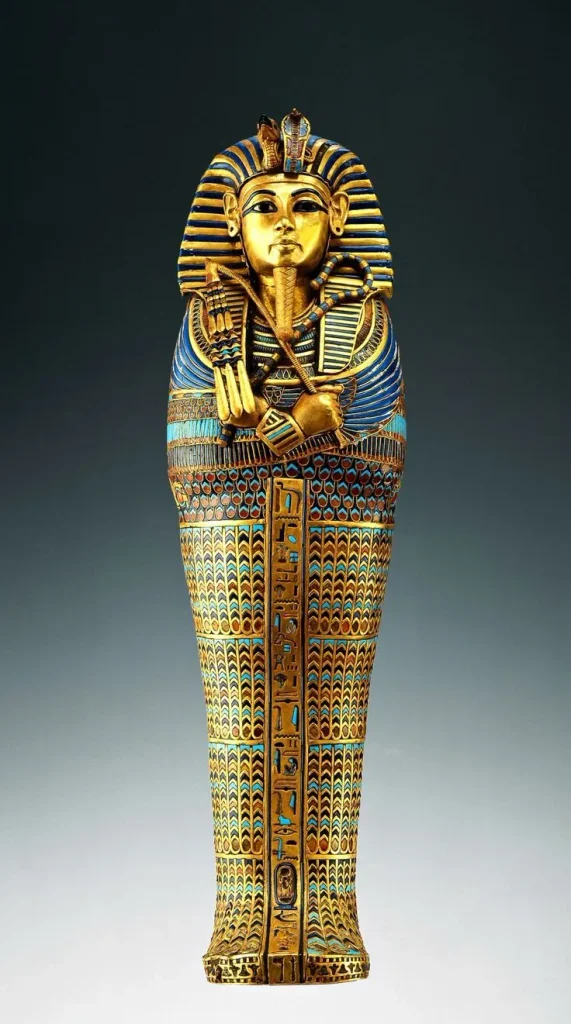
Perhaps the most famous Ancient Egyptian to be buried in the Valley of the Kings is Tutankhamun.
His real name means “living under the shadow of Amun”, and he reigned in the 15 th century BCE. His tomb was discovered by famed egyptologist Howard Catter and his team of skilled workers and treasure hunters in 1922. The boy king’s tomb is widely considered to be one of the most important archaeological discoveries of modern times. His tomb contained numerous treasure and exquisite antiquities, including the iconic golden burial mask.
While many people remember King Tut from history lessons in school, he was an ordinary king and died at a young age, leaving behind a short-lived legacy.
The Fall of Ancient Egypt
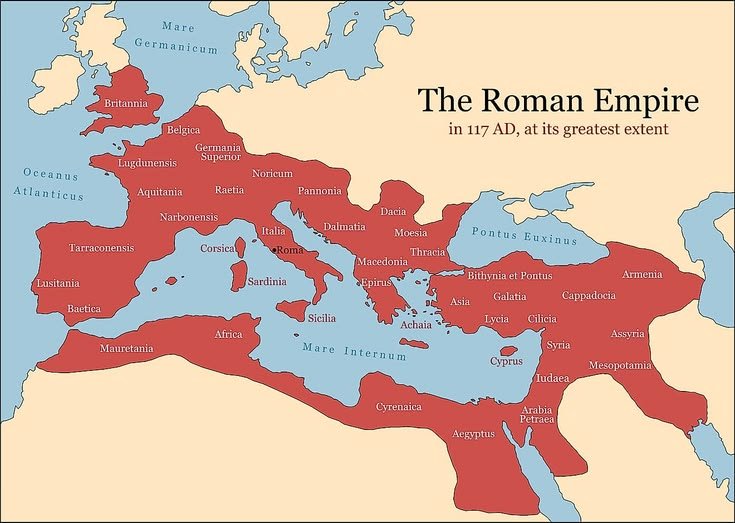
The long history of Ancient Egypt stretched for several millennia, yet Ancient Egypt was not destined to last forever. Like any other ancient civilization, Egypt eventually declined and disappeared. Over time, the mighty Egyptian Empire was conquered by the Persians, then the Macedonian Greeks under Alexander the Great, and finally the Romans.
The last Ancient Egyptian ruler was the legendary Cleopatra VII, who ruled the land of Egypt at the dawn of the first century BCE. With her death (poisoned perhaps by her own hand), the Roman Empire annexed Egypt, officially bringing an end to Ancient Egypt.
Yet, despite its decline, Ancient Egypt’s influence stretched throughout history, shaping numerous cultures that followed.
Final Thoughts
Ancient Egypt has an epic history spanning thousands of years. Not only is it remembered for such iconic symbols as the Great Pyramid of Giza or the Terracotta Army, but it played a significant part in human history. From the development of the unique writing system and ancient hieroglyphs to the construction of the first monumental structures, the ancient egyptians made numerous contributions to human history and to the development of the first civilizations.
Despite the pharaohs walking the banks of the Nile, despite the pyramids rising majestical above the sandy horizon, despite the gods guarding ancient temples, it is now the eternal stories told and archeological excavations digging deep that ensure the legacy of the Ancient Egypt will continue to live forever.